Protect our offshore ocean
Add Your Name
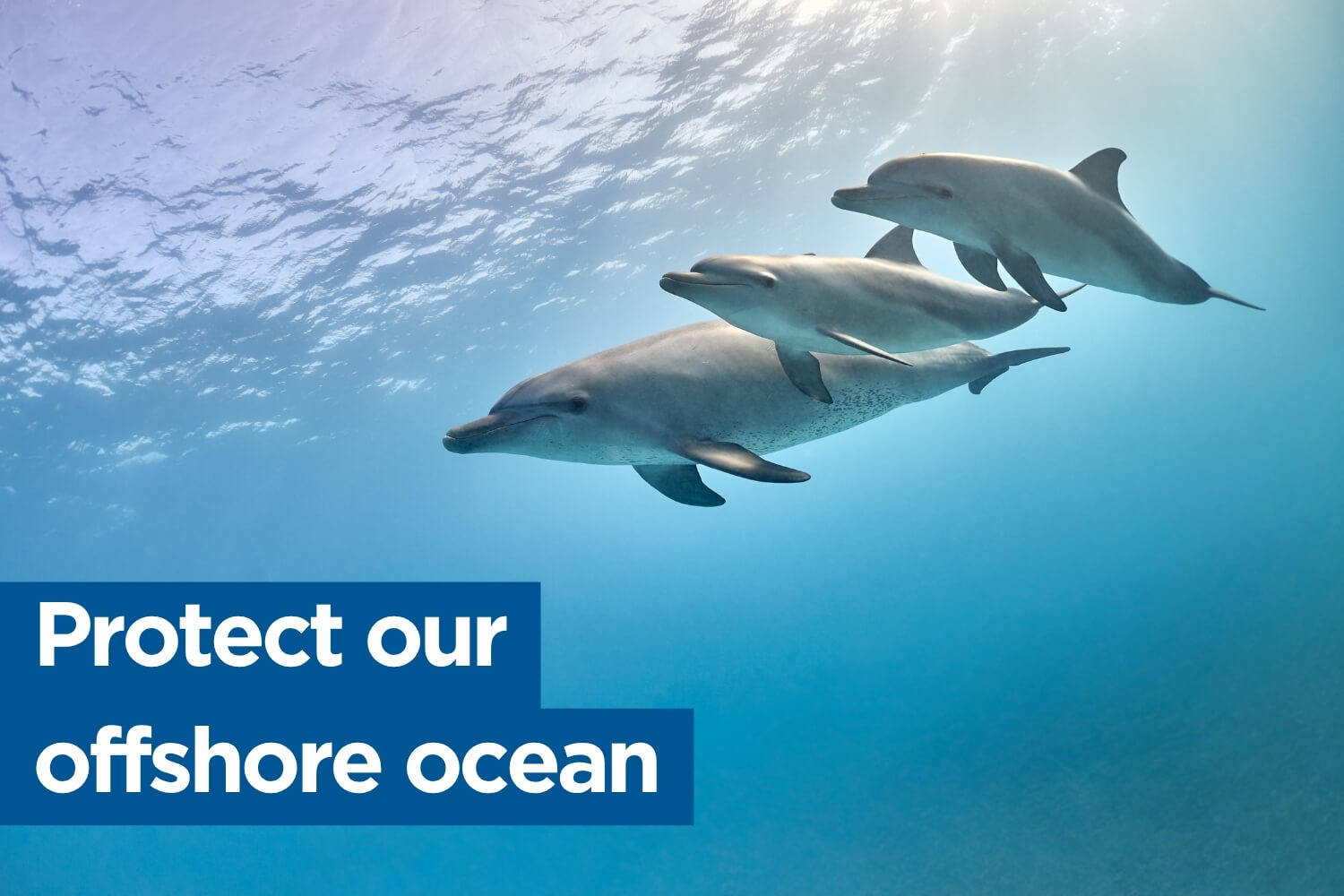
The Top End is home to some of the healthiest tropical coasts left in the world. Beyond the coasts and over the horizon, our offshore waters are part of the same living ocean. Their seagrass meadows, reefs and canyons provide nursery and feeding grounds for fish and habitat for turtles, dugongs, dolphins, sawfish and seabirds.
These same waters are facing increasing pressures from ghost nets, pollution, and the impacts of climate change. Both bottom trawling and oil and gas industry activities occur across the north, shockingly even in our offshore marine parks!
Established in 2018, the North Marine Parks network (see map below) is currently undergoing a review - offering a rare chance to win stronger protections.

Map: The current North Marine Parks Network in place since 2018
Offshore marine parks support pelagic fish such as snapper, tuna and mackerel. Protecting offshore nursery, feeding and aggregation areas can support healthier marine life and fish stocks across connected waters, including the coastal areas Territorians use and love.
Add your name now to protect northern offshore ocean:
 Get destructive industrial activities like seabed mining, oil, gas and seismic blasting, and bottom trawling out of our offshore marine parks.
Expand marine sanctuaries to enhance biodiversity, improve resilience, and replenish fish populations.
Make the plan work for the long term - deliver a science-based and well-funded marine park network, shaped through properly resourced, place-based work with Traditional Custodians, regional communities and Territorians.
A marine park is a large managed area that can contain several zones allowing different activities, including recreational and commercial fishing, aquaculture and, surprisingly, mining, oil and gas activities. Marine sanctuaries, also known as National Park Zones, is the strongest protection. They allow boating, diving and tourism, but fishing, mining and oil and gas activities are not permitted. The closest federal marine park to Darwin is the Oceanic Shoals Marine Park, located about 150 kilometres to the north-west.
Add your name to support healthy offshore oceans.
Read the email that we'll send
Dear Minister Watt,
I welcome this once-in-a-decade opportunity to improve protection for our iconic offshore northern oceans.
The Top End is home to some of the healthiest tropical coasts left in the world. The Commonwealth waters offshore are part of the same living ocean. Their seagrass meadows, reefs and canyons provide nursery and feeding grounds for fish and habitat for turtles, dugongs, dolphins, sawfish, sharks and seabirds. Yet only 1.2% of the whole North Marine Region is protected in marine sanctuaries (National Park Zones) and intensive industrial activities remain allowed across large parts of the marine parks.
Trawling is permitted in more than 5.7 million hectares of the North Marine Parks Network (about 36%), spanning four of its eight marine parks. Pelagic and demersal gillnetting is allowed in more than 6.9 million hectares (about 44%), spanning seven of the eight parks. Existing oil and gas interests cover just under 1.6 million hectares in the Joseph Bonaparte Gulf and Oceanic Shoals marine parks.
The independent fishing-gear risk assessment commissioned by the Australian Government when the North marine parks network was first established found that demersal and semi-demersal trawling and set mesh nets had unacceptable impacts on the values in the North Marine Region's marine parks. It assessed pelagic and demersal gillnetting as incompatible, pending further assessment. These activities do not belong in our marine parks.
The North Marine Region is also facing increasing pressures from illegal fishing, ghost nets and marine plastic pollution, and the impacts of climate change.
The review of the 2018 north marine park network management plan is a welcome opportunity to increase protection and improve the health of our northern ocean. Healthy offshore oceans will help sustain healthy coasts, fish stocks and a strong future for Territory communities. Protecting offshore nursery, feeding and aggregation areas can support healthier marine life and fish stocks across connected waters, including the coastal areas Territorians use and love.
As someone who cares deeply about the health of our northern ocean, I am writing to ask the Federal Government to:
1. Protect marine parks from industrial activities
Follow the approach adopted in the South-east Marine Parks Network in 2025 by limiting intensive activities. Prohibit seabed mining, prevent new oil and gas activities and seismic blasting, and add bottom trawling to the activities that should not be permitted inside marine parks.
2. Expand National Park Zones across the marine parks
Place the strongest protection in the right locations, based on comprehensive, adequate and representative, and other scientific design principles. Ensure these areas are well-managed and well-funded, and reflect First Nations’ aspirations. Consider targeted outer-boundary improvements where important and vulnerable habitats fall outside current marine park protections.
3. Reduce the impacts of pelagic and demersal gillnetting
The independent fishing-gear risk assessment identified pelagic and demersal gillnetting as incompatible with marine park values, pending further assessment. These activities do not belong in our marine parks and consideration should be given to reducing both pelagic and demersal gillnetting across the North Marine Parks Network.
4. Make the plan work for the long term
Deliver a science-based and well-funded marine park network, shaped through properly resourced, place-based work with Traditional Custodians, regional communities and Territorians.
Australia's northern ocean is unique and diverse, and is interconnected with our Top End coastal lifestyle and economy. Science shows fully protected marine sanctuaries enhance marine biodiversity, improve resilience, and replenish fish populations, both inside and around the sanctuaries, and can improve fishing outside the boundaries.
Traditional Owner knowledge, cultural values and governance are essential to effective marine park management and the long-term health of our oceans. Marine protected areas must respect Indigenous rights, knowledge and connections to Sea Country.
Australia's oceans are under more pressure than ever before. That is why I also support strong, science-based expansion of National Park Zones in Temperate East, North-west and South-west marine regions, and in the Coral Sea Marine Park, and the proposed greater protection around Lord Howe and Norfolk islands in line with the aspirations of those island communities.
Please count this as my submission to the Notice of Intent consultation and to the separate proclamation consultation for proposed greater protection around Lord Howe and Norfolk islands.
Yours sincerely,
(Your name and email will be added here)